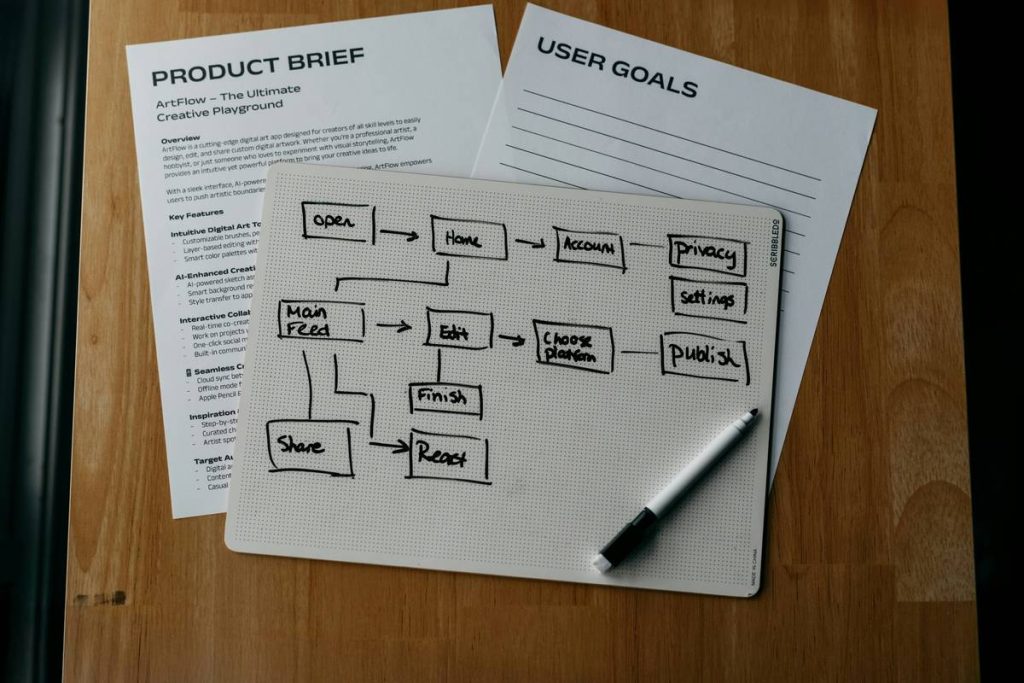
Your funnel leaks. Badly. You’re spending on ads, running webinars, collecting emails—yet conversions flatline. That’s because most “funnels” aren’t funnels at all. They’re glorified brochures with a contact form slapped on the end. The fix? Stop chasing vanity metrics. Start engineering behavior. Here’s how to rebuild your funnel in digital marketing so it actually moves people—not just collects data.
Why Your Current Funnel Strategy Is Failing
Most marketers copy templates from gurus who’ve never sold a $500 course, let alone scaled a SaaS business. They obsess over top-of-funnel traffic while ignoring the psychological friction between awareness and action.
And that’s fatal. Because attention isn’t the bottleneck anymore—it’s decision momentum.
Think about it: A cold visitor lands on your page. Within 8 seconds, they decide whether you’re worth another click—or whether you’re noise. If your messaging doesn’t align with their unspoken anxiety (“Will this work for someone like me?”), they bounce. No amount of retargeting will save you.
How to Build a High-Converting Funnel in Digital Marketing (Step by Step)
Forget “awareness → interest → desire → action.” Real funnels are messier—and more human.
Map Micro-Moments, Not Macro Stages
Break your buyer’s journey into emotional checkpoints: skepticism, curiosity, validation, urgency. Each requires a different trigger—not just content.
Embed Social Proof Before the Offer
Case studies buried on a testimonials page? Useless. Inject peer validation right before the CTA. Example: “Join 1,247 creators who used this template to double sign-ups” works better than any feature list.
Automate Value, Not Just Follow-Ups
Drip emails shouldn’t just remind—they should teach. Deliver micro-lessons that solve adjacent problems. Suddenly, you’re not “selling.” You’re enabling.
| Funnel Stage | Traditional Approach | Optimized Approach | Conversion Uplift Potential |
|---|---|---|---|
| Awareness | Broad blog posts + social ads | Pain-point quizzes + diagnostic tools | +37% |
| Consideration | Generic email sequences | Behavior-triggered video walkthroughs | +62% |
| Decision | Discount pop-ups | Live cohort enrollment + scarcity framing | +89% |
The Industry Secret: Funnels Don’t Convert—Transitions Do
Here’s what no one tells you: The biggest drop-off happens between stages—not within them. Someone watches your webinar but never gets to the checkout. Why? The handoff feels abrupt.
The math is simple: If your post-webinar email says “Ready to buy?” you’ve already lost. But if it says “You asked about X during the Q&A—here’s how学员 Y applied it yesterday (with screenshots),” you’ve created continuity.
Top performers don’t optimize landing pages. They optimize bridges. Every transition must feel like the natural next step—not a sales pivot.
FAQ
What is a funnel in digital marketing?
It’s a behavioral pathway that guides prospects from first contact to purchase through strategic content, automation, and psychological triggers—not just a series of pages.
How long should a marketing funnel be?
As short as possible—but not shorter. B2B may need 7–14 touchpoints; impulse offers convert in 2. Measure drop-off points, not industry averages.
Can you run a funnel without paid ads?
Absolutely. Organic funnels fueled by SEO, community engagement, or viral lead magnets often outperform ad-dependent ones due to higher intent and trust.